
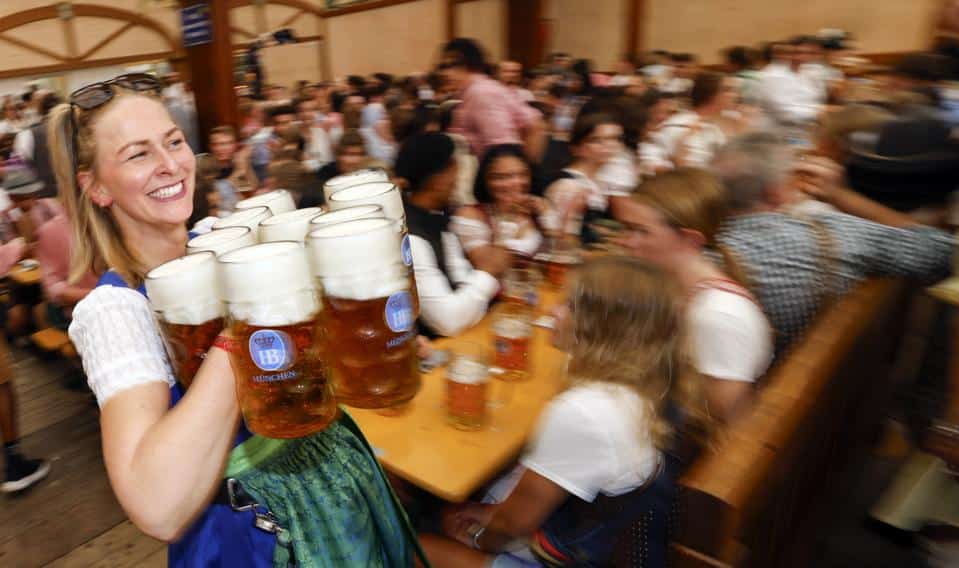
TOPSHOT – A waitress serves beer in the Hofbraeu tent during the opening of the 190th Oktoberfest beer festival in Munich, southern Germany on September 20, 2025. The world’s biggest beer festival Oktoberfest runs until October 5, 2025. (Photo by MICHAELA STACHE/AFP via Getty Images)
Mention Oktoberfest and a few things probably come to mind: giant steins of beer, lederhosen, brass bands, pretzels and enormous tents filled with thousands of people.
Funny enough, none of those things are why Oktoberfest exists.
The world’s most famous beer festival actually started with a wedding. And the main event wasn’t drinking. It was horse racing.
Over the next two centuries, that royal wedding celebration slowly morphed into the massive Munich party we know today. Along the way, it picked up beer tents, carnival rides, roast chicken and plenty of traditions that seem centuries old but actually aren’t.
Here’s how a wedding afterparty became one of the biggest drinking events on the planet.
Oktoberfest Started With A Royal Wedding
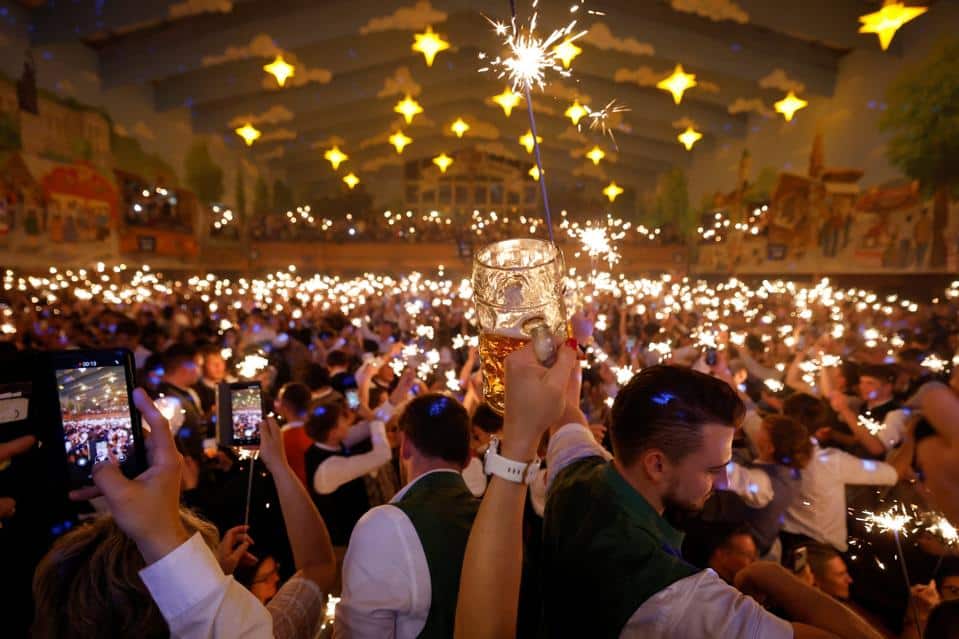
A visitor raises a beer mug as waitresses, waiters and visitors at the Hacker Pschorr tent celebrate the last day of the world’s largest beer festival Oktoberfest with sparklers, on October 5, 2025 in Munich, southern Germany. 6.5 million visitors attended the Oktoberfest over the 16 days, drinking 6.5 million liters of beer. (Photo by ALEXANDRA BEIER / AFP)
It all goes back to 1810, when Crown Prince Ludwig of Bavaria married Princess Therese of Saxe-Hildburghausen.
The couple tied the knot on October 12, but Bavaria wasn’t going to let a royal wedding end after one night. Munich residents were invited to join several days of festivities, culminating in a horse race on October 17 on fields just outside the city’s gates.
People apparently had a pretty good time.
The horse race returned the following year, helping turn what could have been a one-off celebration into an annual tradition.
The festival grounds were named Theresienwiese, or “Therese’s Meadow,” after the bride. More than 200 years later, Oktoberfest still happens there. Locals typically shorten the name to “Wiesn,” which is also what you’ll often hear people in Munich call Oktoberfest.
So, technically, you can thank Princess Therese’s wedding for all those one-liter beers.
The Beer Party Came Later
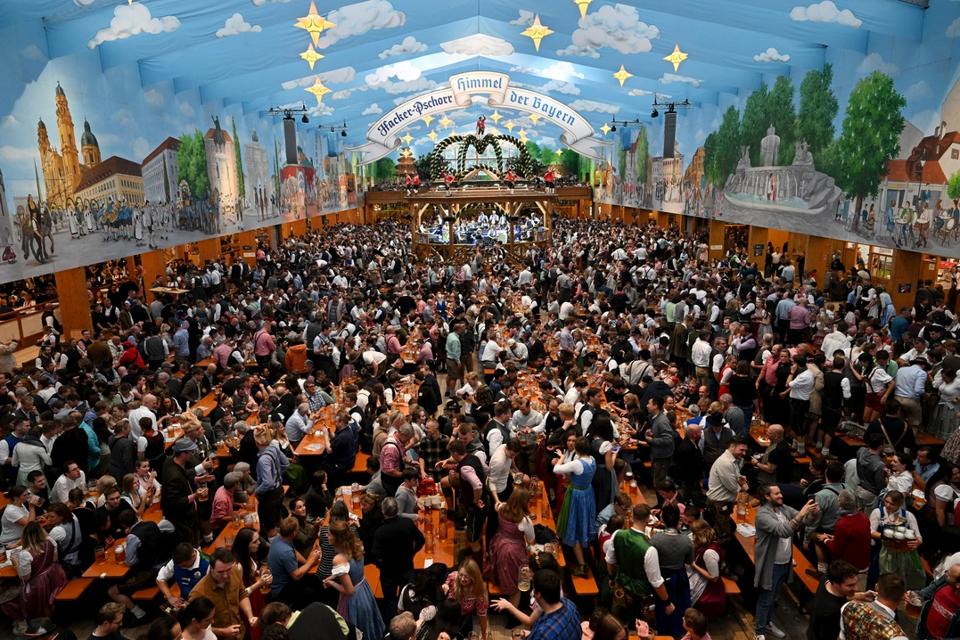
Festival-goers gather and cheer in a beer tent during the Oktoberfest beer festival at the Theresienwiese fairground in Munich, southern Germany, on September 20, 2022. The world renowned Beer festival is to take place until October 3, 2022 without access restrictions, after the past two years’ editions had been cancelled due to the coronavirus pandemic. (Photo by Christof STACHE / AFP)
The first Oktoberfest would be almost unrecognizable to someone walking into the festival today.
An agricultural fair was added in 1811 to showcase Bavarian farming. The first carousel and swings showed up a few years later in 1818, laying the groundwork for the sprawling carnival that now accompanies all that beer.
The famous beer tents themselves took considerably longer.
For much of the 19th century, beer was served from relatively modest stands. Those gradually grew into larger halls and tents as crowds increased and breweries became more involved.
By the turn of the 20th century, the beer halls were becoming a defining part of the experience.
Today, they’re arguably the defining part.
Some of Oktoberfest’s largest tents can hold thousands of people at once, with servers carrying staggering numbers of one-liter beer mugs through packed crowds.
The horse racing that started the whole thing? That’s mostly gone.
Oktoberfest Beer Isn’t Quite What Many Americans Think
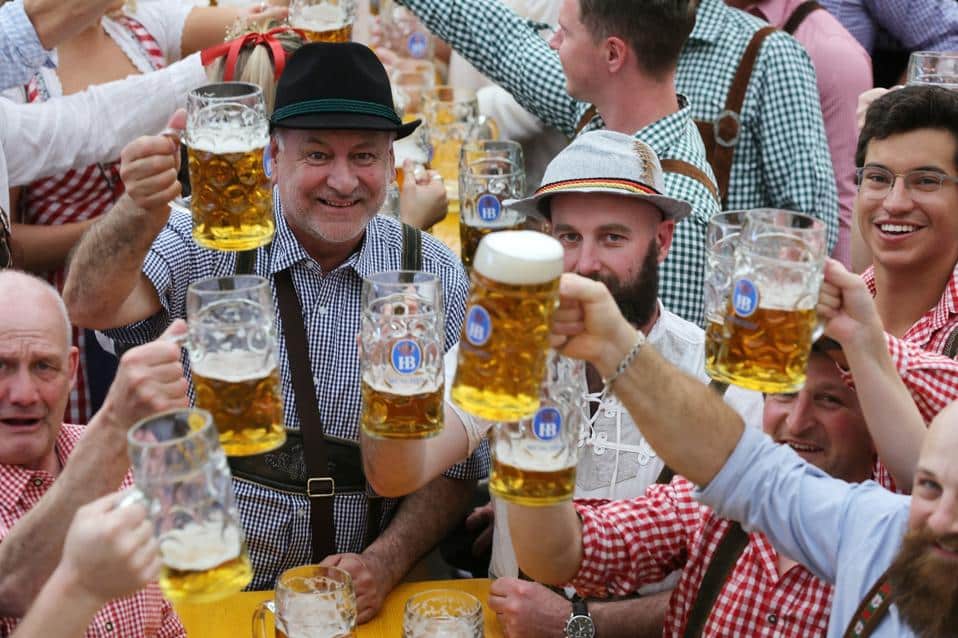
MUNICH, GERMANY – SEPTEMBER 21: Revelers cheer with 1-liter-mug of beer at Paulaner beer tent during the opening day of the 2024 Munich Oktoberfest, Munich’s annual beer festival, on September 21, 2024 in Munich, Germany. This year’s Oktoberfest will run through October 6 and is expected to draw millions of visitors. (Photo by Johannes Simon/Getty Images)
Even the beer has changed.
For years, Oktoberfest was closely associated with Märzen, the amber-colored German lager traditionally brewed in March and stored through the summer.
That’s still what many Americans picture when they order an Oktoberfest beer.
But head to Munich and you’ll generally find something different in your mug.
Modern Oktoberfest beer is typically Festbier, a paler, crisp lager designed to be dangerously easy to drink by the liter.
And just because a brewery makes an “Oktoberfest” beer doesn’t mean it can pour it at the actual Oktoberfest.
Only beer brewed in Munich that meets the festival’s requirements can be served at the Wiesn. That leaves six Munich breweries pouring the official stuff: Augustiner, Hacker-Pschorr, Hofbräu München, Löwenbräu, Paulaner and Spaten.
Beer comes in a Maß, the traditional one-liter mug.
That’s roughly 34 ounces of beer at a time, so pace yourself accordingly.
Why Is Oktoberfest Mostly In September?
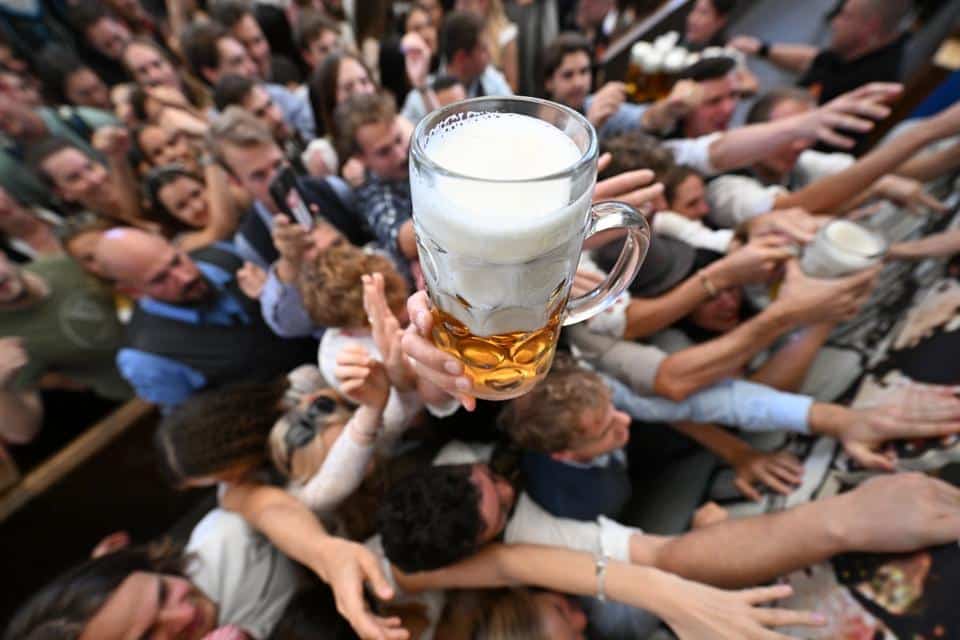
Revellers jostle for a beer mug on the opening day of the Oktoberfest beer festival in Munich, southern Germany, on September 21, 2024. The world’s biggest beer festival Oktoberfest runs until October 6, 2023. (Photo by Kirill KUDRYAVTSEV / AFP)
Then there’s the name.
If you’re planning an Oktoberfest trip to Munich, waiting until October is not a particularly good strategy.
The original festivities happened in October, hence the name. But organizers eventually shifted the start into September for a simple reason: The weather is generally better.
September offered warmer temperatures and longer days, both of which are pretty useful when you’re trying to convince millions of people to hang out at an outdoor festival.
The October name stuck.
In 2026, Munich’s Oktoberfest runs from September 19 through October 4.
By the time Halloween decorations start going up in the U.S., Munich has already packed away the beer tents.
That Famous Keg-Tapping Tradition Isn’t That Old
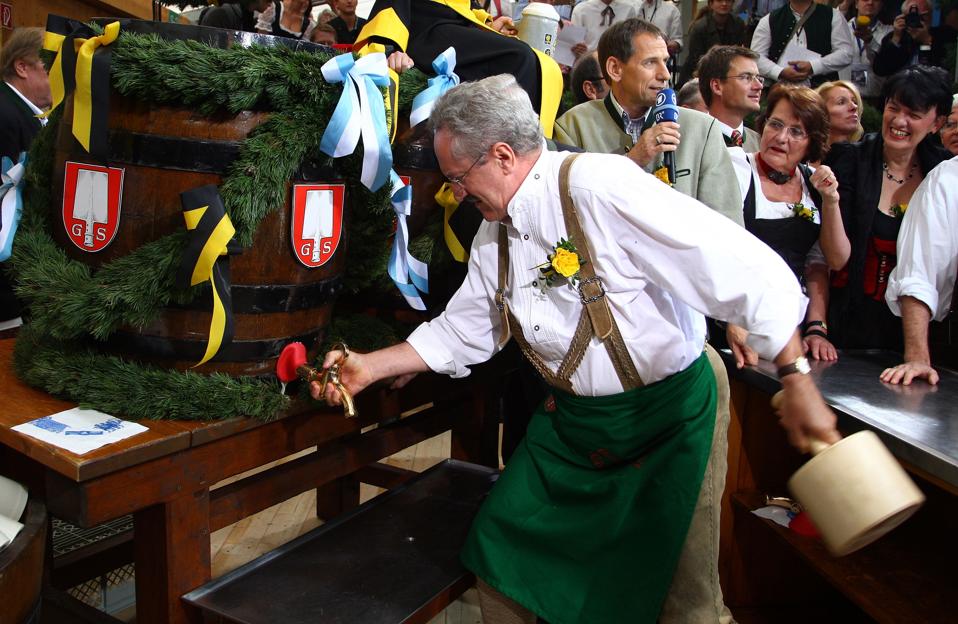
MUNICH, GERMANY – SEPTEMBER 20: Munich’s lord mayor Christian Ude (C) opens the first beer barrel with the traditional cry ‘O zapft is!’ (It’s tapped!’) to start the Oktoberfest beer festival on September 20, 2008 in Munich, Germany. The Oktoberfest is seen as the biggest beer festival worldwide. (Photo by Andreas Rentz/Getty Images)
Opening day brings one of Oktoberfest’s most famous traditions.
At noon, Munich’s mayor taps the first barrel of beer inside the Schottenhamel tent and declares “O’zapft is!”, essentially “It’s tapped.”
Only then can the beer start flowing across the festival. It feels like a ceremony that must date back to Ludwig and Therese.
Not even close.
The tradition began in 1950, when Munich Mayor Thomas Wimmer tapped the inaugural keg.
And “tapped” might be generous. Wimmer reportedly needed 17 blows to get the job done.
Modern mayors have become considerably more efficient, and the number of swings it takes to tap the barrel has become something of an opening-day sport in its own right.
Oktoberfest Hasn’t Actually Happened Every Year
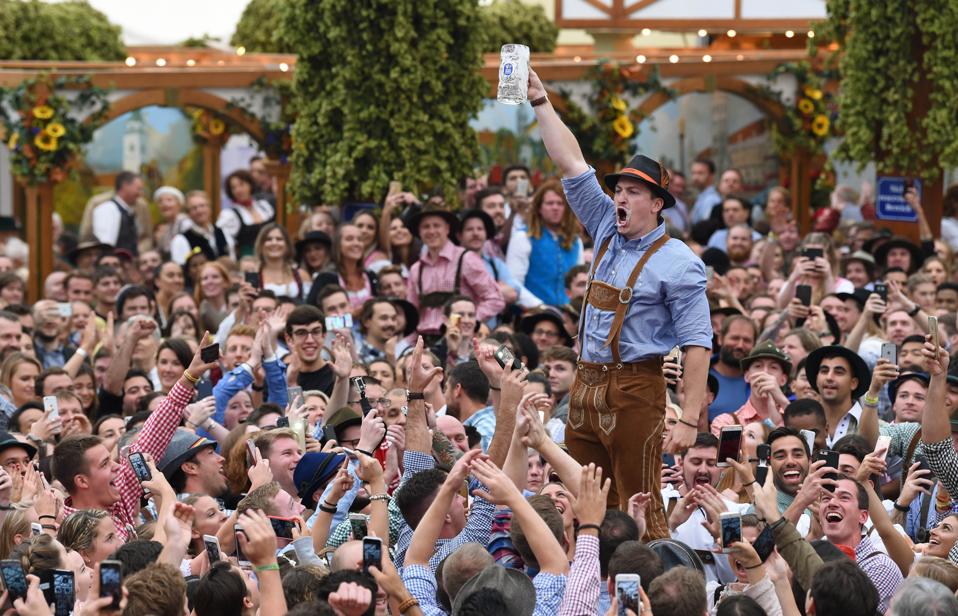
Visitors cheer a man as he reacts after drinking on ex a mug full of beer during the 184th Oktoberfest, Munich’s annual beer festival, on September 16, 2017 in Munich, southern Germany. The world’s largest beer festival is held from September 16 until October 3, 2017. (CHRISTOF STACHE/AFP via Getty Images)
For a festival that’s more than two centuries old, Oktoberfest has had its share of interruptions.
Wars, economic crises and disease have repeatedly forced Munich to cancel or modify the celebration.
World War I and World War II caused extended interruptions. In some difficult years surrounding the wars, Munich held smaller autumn festivals instead.
More recently, COVID-19 wiped Oktoberfest off the calendar in both 2020 and 2021. The beer finally started flowing again in 2022.
The festival’s history also includes tragedy. In 1980, a bomb exploded near Oktoberfest’s main entrance, killing 12 visitors and the attacker and injuring more than 200 others. A memorial near the site honors the victims.
Oktoberfest Became Much Bigger Than Munich
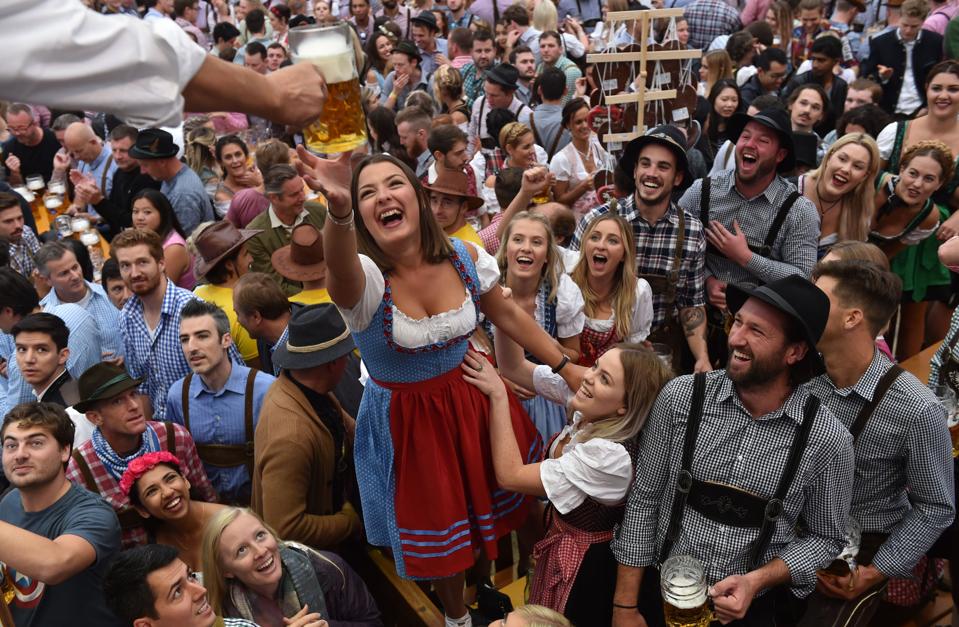
An young woman gets a beer mug after the official opening of the 184th Oktoberfest, Munich’s annual beer festival, on September 16, 2017 in Munich, southern Germany. (CHRISTOF STACHE/AFP via Getty Images)
Somewhere along the way, Oktoberfest stopped being just a Munich event and became an entire season.
Oktoberfest celebrations now pop up everywhere from Cincinnati to Brazil. Breweries release seasonal beers bearing the name every fall, while bars and restaurants roll out pretzels, sausages and steins as soon as September arrives.
But Munich’s version remains distinctly Bavarian.
Oktoberfest is technically a Volksfest, or folk festival, rather than simply a beer festival. Beer is obviously a huge part of the equation, but so are food, rides, music, parades and Bavarian traditions.
And that’s what makes its evolution so interesting.
Nobody sat down in 1810 and decided to create the world’s most famous beer festival.
Instead, a royal wedding led to a horse race. The horse race became an annual celebration. Simple food and beer stands became massive tents. A few swings and a carousel evolved into a full-blown amusement park. And a local Munich tradition became an international shorthand for drinking beer in very large glasses.
More than two centuries later, the wedding is mostly a historical footnote.
The afterparty is still going strong.
By Emily Price, Contributor
© 2026 Forbes Media LLC. All Rights Reserved
This Forbes article was legally licensed through AdvisorStream.
This content has been reviewed by FINRA. Prepared by Broadridge Advisor Solutions. © 2026 Broadridge Financial Services, Inc.
Securities offered through LPL Financial, Member FINRA/SIPC. Investment advice offered through WNY Asset Management, LLC, a registered investment advisor and is a separate entity from LPL Financial.